 Yfirlýsing FFÍ
Tengdar fréttir
Stuðningsyfirlýsing
Félag íslenskra atvinnuflugmanna (FÍA) lýsir yfir fullum stuðningi við Flugvirkjafélag Íslands í baráttu þeirra vegna endurnýjunar kjarasamnings félagsins við Icelandair.
Verkföll eru ávallt neyðaraðgerð þegar samningsumleitanir hafa ekki skilað árangri.
FÍA skorar á samningsaðila að leita allra leiða til að finna samningsgrundvöll svo afstýra megi verkfalli.
 Lesa meira
Röksemdir stjórnenda Icelandair fyrir Möltuleyfinu standast ekki skoðun
Fréttatilkynning
Frá: Félag íslenskra atvinnuflugmanna (FÍA)
Dags: 21. ágúst 2026
Efni: Kaup Icelandair Group hf. á 49% hlut í Fly Play Europe Holdco ehf.
Félag íslenskra atvinnuflugmanna (FÍA) lítur kaup Icelandair Group hf. á 49% hlut í Fly Play Europe Holdco ehf. alvarlegum augum. Samningur um kaupin var gerður 20. ágúst, með fyrirvara um samþykki maltneskra flugmálayfirvalda á sama tíma og kjaradeila Icelandair og FÍA er til meðferðar hjá ríkissáttasemjara og unnið er eftir sameiginlega undirritaðri verkstýrðri verkáætlun og friðarskylda er í gildi.
FÍA gerir ekki athugasemd við að Icelandair leiti hagræðingar í rekstri en telur að skýringar stjórnenda á þessum kaupum séu misvísandi og standist ekki skoðun.
Í maí „engin fækkun“ í ágúst „á eftir að koma í ljós“
FÍA getur ekki byggt kjaraviðræður á forsendum sem breytt er einhliða á fjögurra mánaða fresti. Þau störf sem hér eru í hættu eru störf sem unnin hafa verið á forsendum gildandi kjarasamninga. FÍA mun ekki geta fallist á að lögum og reglum íslensks vinnumarkaðar sé ekki fylgt.
Þegar viljayfirlýsing um kaupin var tilkynnt 1. apríl fylgdu henni engar upplýsingar um áhrif á starfsfólk á Íslandi. Í maí sagði forstjóri félagsins í fjölmiðlum að ekki stæði til að fækka starfsfólki hér á landi færu kaupin í gegn.
Þegar kaupin voru svo frágengin 20. ágúst og forstjórinn var spurður hvort íslenskar áhafnir myndu manna þau leiguflug sem færast á maltneska leyfið var svarið: „Það á eftir að koma í ljós.“ Fortakslaus yfirlýsing í maí er þannig orðin óvissa í ágúst án þess að viðsemjendur, starfsfólk eða markaður hafi verið upplýst um hvað breyttist.
83 milljónir fyrir leyfi, ekki fyrir flugrekstur
Kaupverð 49% hlutarins var 686 þúsund bandaríkjadalir, um 83 milljónir króna, og Icelandair hefur jafnframt tryggt sér heimild til að auka hlut sinn síðar. Fly Play Europe á hvorki né rekur eigin flugvélar. Engin flugvél er skráð á leyfið. Það sem verið er að kaupa er flugrekstrarleyfið sjálft.
Icelandair segir sjálft að viðskiptin hafi óveruleg áhrif á afkomu og efnahag félagsins á árinu 2026. Kjarni málsins er því ekki verðmæti eignarinnar, heldur hver ætlunin er að gera við leyfið og hvers vegna það er þess virði að setja yfirstandandi kjaraviðræður í uppnám.
Röksemdin um „aðgang að nýjum mörkuðum“ stenst ekki
Stjórnendur hafa sagt að kaupin auki sveigjanleika, gefi kost á einfaldari og skilvirkari rekstri og opni leiguflugsmöguleika vegna víðtækari loftferða- og tvísköttunarsamninga.
Samkvæmt greiningu sem birt hefur verið á vef Flugvirkjafélags Íslands er Ísland aðili að loftferðasamningum við 93 lönd en Malta við 88. Tvísköttunarsamningar Íslands eru sömuleiðis ekki færri en Möltu. Malta veitir því ekki aðgang að fleiri mörkuðum en Ísland.
Samstæðan á Íslandi hefur sinnt leiguflugsverkefnum í öllum sjö heimsálfum með frábærum árangri á íslensku flugrekstrarleyfi. Hryggjarstykkið í þeim árangri hefur verið starfsfólk félagsins, ekki síst flugáhafnir. Hvar kreppir skórinn?
„Sveigjanleiki“ í formi félagslegs undirboðs
Icelandair hefur í yfirstandandi viðræðum lagt þunga áherslu á heimild til að leigja inn erlendar flugvélar ásamt áhöfnum (blautleigu) og aukinn sveigjanleika í reglum um hvíldartíma og lengd fluga. Á sama tíma hefur félagið tryggt sér flugrekstrarleyfi utan íslensks vinnumarkaðsumhverfis. Í því samhengi er nærtækasta merking orðsins „sveigjanleiki“ sú að komast undan íslenskum kjarasamningum og eftirliti yfirvalda.
FÍA telur að rekstrarformið byggi á félagslegu undirboði, sniðgöngu kjarasamninga og flutningi starfa úr landi. Ef sú niðurstaða er röng er einfalt fyrir stjórnendur að leggja fram þær forsendur og útreikninga sem sýna annað. Slík gögn hafa ekki verið lögð fram hvorki fyrir viðsemjendur, starfsfólk né hluthafa.
Reynslan af erlendum verkefnum samstæðunnar
Í fyrrnefndri greiningu á vef Flugvirkjafélags Íslands er rakið að fjárfestingar samstæðunnar í erlendum flugrekstri hafi kostað verulegar fjárhæðir í gegnum tíðina; SmartLynx í Lettlandi, Travel Service í Tékklandi og Cabo Verde Airlines hafa samanlagt kostað félagið milljarða króna.
Áður en enn einu erlendu flugrekstrarleyfi er bætt við, og störf flutt úr landi í kjölfarið, er lágmarkskrafa að stjórnendur geri grein fyrir því hvað þeir læra af þeirri reynslu og hvers vegna útkoman verði önnur núna. Þeim spurningum er ósvarað.
FÍA kallar eftir því
- að stjórnendur leggi fram skriflegar og tölulegar forsendur kaupanna: hvaða hagræðing er áformuð, hvernig hún er reiknuð og á hverju hún byggir.
- að þeir svari skýrt hvaða störf, flugvélar og verkefni eigi að færast á maltneska leyfið, hvenær og á hvaða kjörum.
- að þeir nefni þá markaði sem maltneskt flugrekstrarleyfi opnar en íslenskt gerir ekki.
- að stjórnendur virði friðarskylduna og hætti einhliða yfirlýsingum sem grafa undan yfirstandandi viðræðum.
- að stjórn Icelandair Group hf. gefi hluthöfum, starfsfólki og viðsemjendum skýra grein fyrir raunverulegum forsendum verkefnisins.
Lesa meira
Brot gegn launþegum með samþykki yfirvalda
European Cockpit Association (ECA) hefur gefið út grein sem fjallar um sögu 11 flugmanna Bluebird Nordic. Flugmönnunum var sagt upp í lok árs 2020 og ráðnir gerviverktakar í þeirra stað og voru uppsagnirnar dæmdar ólögmætar af Félagsdómi. Þrátt fyrir að dómstólar hafi dæmt uppsagnirnar ólögmætar hafa brotin ekki haft neinar raunverulegar afleiðingar í för með sér og engum viðurlögum verið beitt.
FÍA telur að þessi þróun og aðgerðaleysi stjórnvalda, skapi hættulegt fordæmi þar sem fyrirtæki geti sagt upp öllu starfsfólki sem starfar samkvæmt kjarasamningum og ráðið gerviverktaka í þeirra stað án afleiðinga.
Greinina má lesa hér (sem og hér fyrir neðan): Impunity by the playbook. Bluebird's pilots won in court. The company went bankrupt. Nobody paid.
Impunity by the playbook
On 30 December 2020, eleven pilots received the same phone call. They were no longer needed at Bluebird Nordic.
"I thought it's just a misunderstanding. We'll fix it in the new year." -former Bluebird pilot
But Bluebird didn't fix it. What those pilots found out instead was that a group of self-employed pilots – which had one day appeared in the office to do the theoretical coursework that precedes simulator training – would be taking over their jobs. In fact, all of the dismissed pilots had actually been asked by Bluebird management to help train this new group of pilots to fly the very routes they were about to lose. “We trained these pilots from start to finish”, one pilot said.
"I did not know then that these were exactly the guys replacing us," another pilot said
Employees out, contractors in
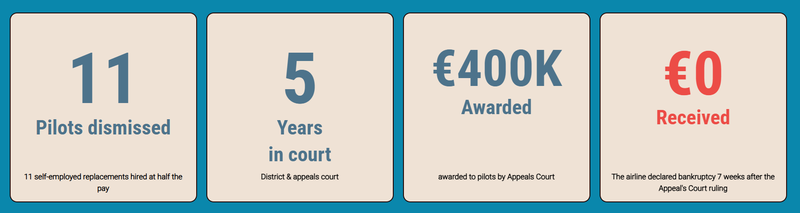
Bluebird Nordic – an Icelandic cargo airline and subsidiary of Avia Solutions Group, which had acquired the company in March 2020 – dismissed all eleven unionised pilots in the middle of negotiations for a renewed collective labour agreement, and simultaneously hired eleven self-employed replacements at roughly half the pay.
The pilots worked under a Collective Labour Agreement with a priority clause – Bluebird could not hire new pilots while existing ones remained available. Dismissing all eleven at once was an attempt to sidestep that obligation entirely.
The pilots suspected it had been planned well in advance. Two weeks before the calls came, the Director of Flight Operations had personally driven to each pilot's home to deliver a Christmas gift basket. "Was this supposed to be some kind of I'm sorry present?" one said later. "I'm sorry about what's coming?"
The pilots lost their jobs, but they did not go quietly. In beginning of February they organized striking actions, physically blocking Keflavik airport to prevent replacement pilots from boarding Bluebirds aircrafts – a move the courts later confirmed was legal. "Our union did everything it was able to do," one pilot said. "From day one until now."
The pilots also received the support of the international pilot community. ECA wrote directly to Bluebird's CEO and CFO, alongside representatives from IFALPA & ITF. The letter described the dismissals as "a deliberate move to pre-empt the ongoing CLA negotiations" and linked them to Bluebird's acquisition by Avia Solutions Group, which it called "known for engaging in precarious atypical employment practices via broker agencies and self-employment set-ups across multiple national jurisdictions." It warned that moving ahead would make Bluebird "synonymous with social dumping, regulatory forum shopping and subsequent distortion of competition."
Bluebird did not change course.
Five years in court
In September 2021, the pilots’ union FÍA won a court case confirming the dismissals were illegal.
Compensation claims followed from March 2023 for the wage losses of these illegal dismissals. In July 2024, the District Court ruled that Bluebird should pay three months' layoff notice minus any income earned elsewhere. This fell well below expectations and disregarded the priority clause entirely. But the judgment put a very low price on illegal dismissal and union avoidance by Bluebird.
This is why pilots appealed the ruling. But before the appeal, Bluebird approached them and offered a money settlement – all or nothing, every pilot had to accept or none could. They declined collectively. "We didn't want them to know that we accepted what they did," one pilot said.
In June 2025, the National Appeal Court increased the compensation. The total reached ISK 56.4 million – around €400,000 – rising to ISK 85 million with interest. For the pilots who had fought through two courts over nearly five years, it was a meaningful vindication. But it didn’t last long.
THE RUG PULL
On 14 August 2025, barely two months after the appeals ruling, Bluebird Nordic was declared bankrupt. By then, the company had already ceased operations in Iceland and moved its activities abroad under the Avia Solutions name.
The timing – a ruling in June, a bankruptcy in August – did not surprise the pilots. "I always thought they were never going to pay us," one said. "Bankruptcy, or just leaving the country. One way or another."
Pilots who had just won their case now stand in a creditor queue, and the prospects of recovery are bleak. A few weeks ago, the District Court ruled that pilot claims do not carry priority status in the bankrupt estate – meaning other creditors are paid first. FÍA has filed claims on the pilots' behalf and is considering whether to appeal that ruling to the next level, Landsréttur.
"They might end up receiving nothing, or just a small share of what they were supposed to receive according to the Appeal Court," FÍA's legal team said.
"Zero expectations," one pilot said, when asked if they believed compensation would ever arrive. "I will not get any money."
A bad precedent
The legal outcome, even where it favoured the pilots, has set a troubling benchmark.
The Appeal Court ruling did not explicitly establish that Bluebird had deliberately set out to avoid collective agreements. What it did establish was that the priority clause was breached – that it makes no legal difference whether replacement pilots are hired as employees or as bogus self-employed contractors if they are performing work that union members are entitled to.
But the practical consequence, according to FÍA, points in a troubling direction. "This case made a really bad precedent for the rest of the industry and into the labour market as a whole," the union's legal team said. "That is: laying off unionised employees and replacing them with bogus self-employed contractors on roughly half the pay. Even though we won the compensation case, it also meant that despite all these illegal actions, Bluebird got away with it.”
In other words, the court confirmed that what Bluebird did was wrong. It also confirmed that the cost of such wrongdoing was roughly three months' notice – and even that could be avoided through bankruptcy.
"We won, and we won, and we won," one pilot said. "But it does not feel like a victory. There were no consequences for them whatsoever for breaking the law and the CLA."
The same people, a new stage
FÍA is watching what happens next with particular concern.
Because history may be repeating itself: The former CEO of Bluebird Nordic – the very executive who oversaw the illegal dismissals – subsequently became Business Development Manager at Play, another Icelandic airline. Interestingly, just before going bankrupt, Play attempted to relocate its operations to Malta – a well-known tax and oversight heaven for airlines keen to optimise their financial and operational performance. Now Icelandair is negotiating to acquire 49% of Play's bankrupt Air Operator's Certificate in Malta, while the former Bluebird CEO is understood to be an advisor to Icelandair on how to optimize its operations. Pure coincidence?
All this happens, while FÍA is in active collective bargaining negotiations with Icelandair. The union says the airline is pushing for significantly expanded flexibility around ACMI and wet lease operations in the new agreement, alongside requirements on working hours and wages. All this bears a striking resemblance to the CLA of Play – written before even hiring pilots.
Most significantly, Icelandair has not answered FÍA's questions about its intentions regarding the Malta AOC acquisition. The union fears the airline intends to operate flights from Malta – instead of Iceland – under lower standards and possibly using bogus self-employed pilots, well outside the scope of the Icelandic collective agreement.
"We are very mindful of our priority clause," FÍA's legal team said. "We do see some similarities. Mainly because we see the same people that were in control when things went down with Bluebird and again with Play."
The 11 dismissed pilots are worried too: "They've established the playbook and they're going to try it again."
Lesa meira